
FundFrame reads every statement and report as it comes in, books the cash flows, and keeps an eye on every fund and company in the portfolio. When something changes, it tells you. When nothing has, it stays quiet. Your team spends its time on the positions that deserve it.

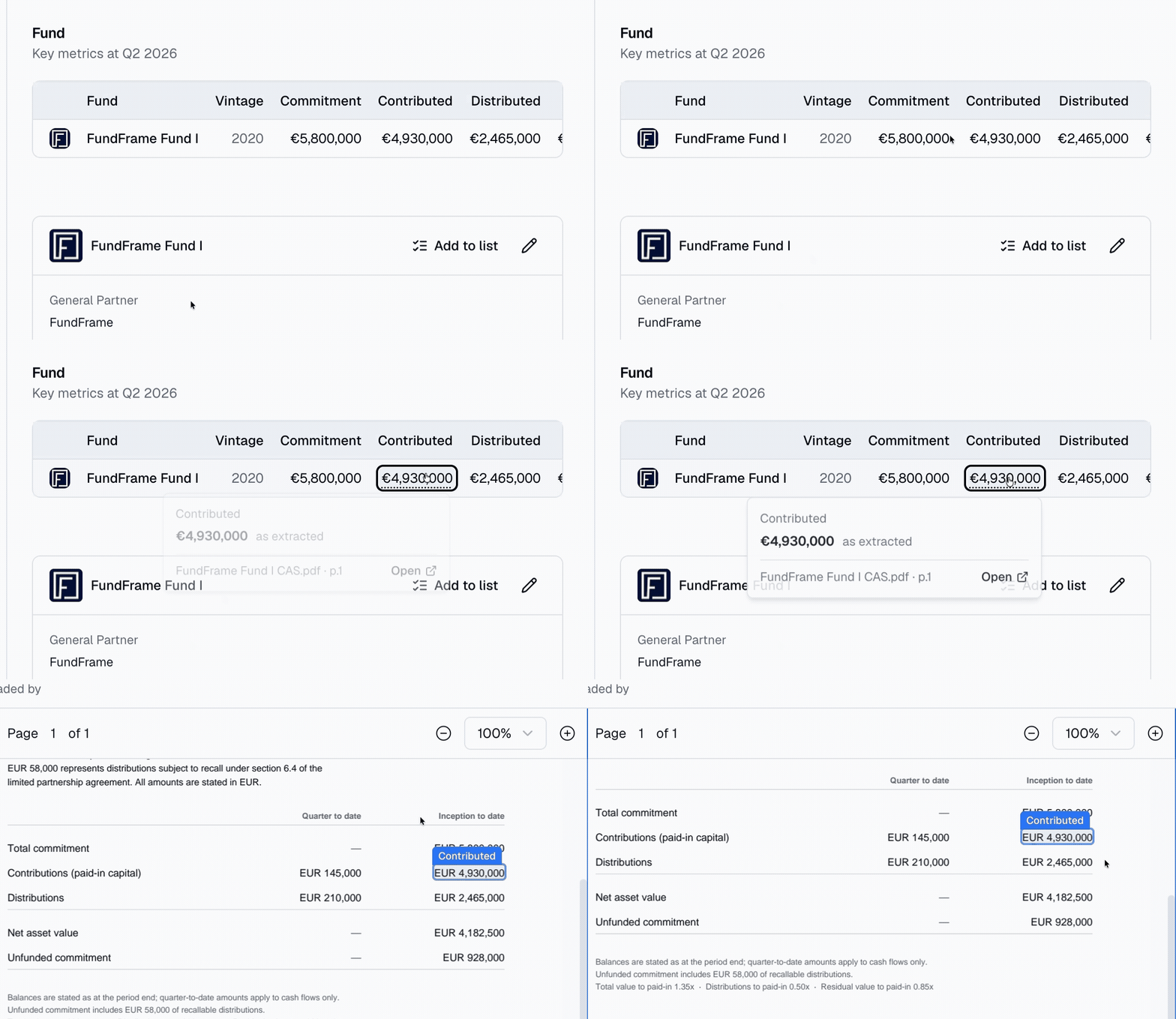
Every report read the day it arrives.
Upload a capital account statement or a quarterly report and FundFrame reads it. Commitments, calls, distributions and NAV land on the right fund, and the company figures land on the right company. Every number keeps a link back to the page it came from, so you can check it in one click.
AI Monitoring Report
Reading the Q2 report
Brightmoor OpCo
AssessingAssessingWritingKeystone Literacy Group
AssessingAssessingWritingCobaltline Software
AssessingAssessingWritingFernhill Facility Services
AssessingAssessingWriting
| Company | Health | Valuation | AI analysis |
|---|---|---|---|
| Brightmoor OpCo | Assessing | Assessing | Writing |
| Keystone Literacy Group | Assessing | Assessing | Writing |
| Cobaltline Software | Assessing | Assessing | Writing |
| Fernhill Facility Services | Assessing | Assessing | Writing |
From the manager's report to your assessment in minutes.
Minutes after a manager's quarterly report arrives, FundFrame AI has read it, assessed the fund and every company in it, and marked the records that need your attention. Your team opens the review with the exceptions already in front of it.
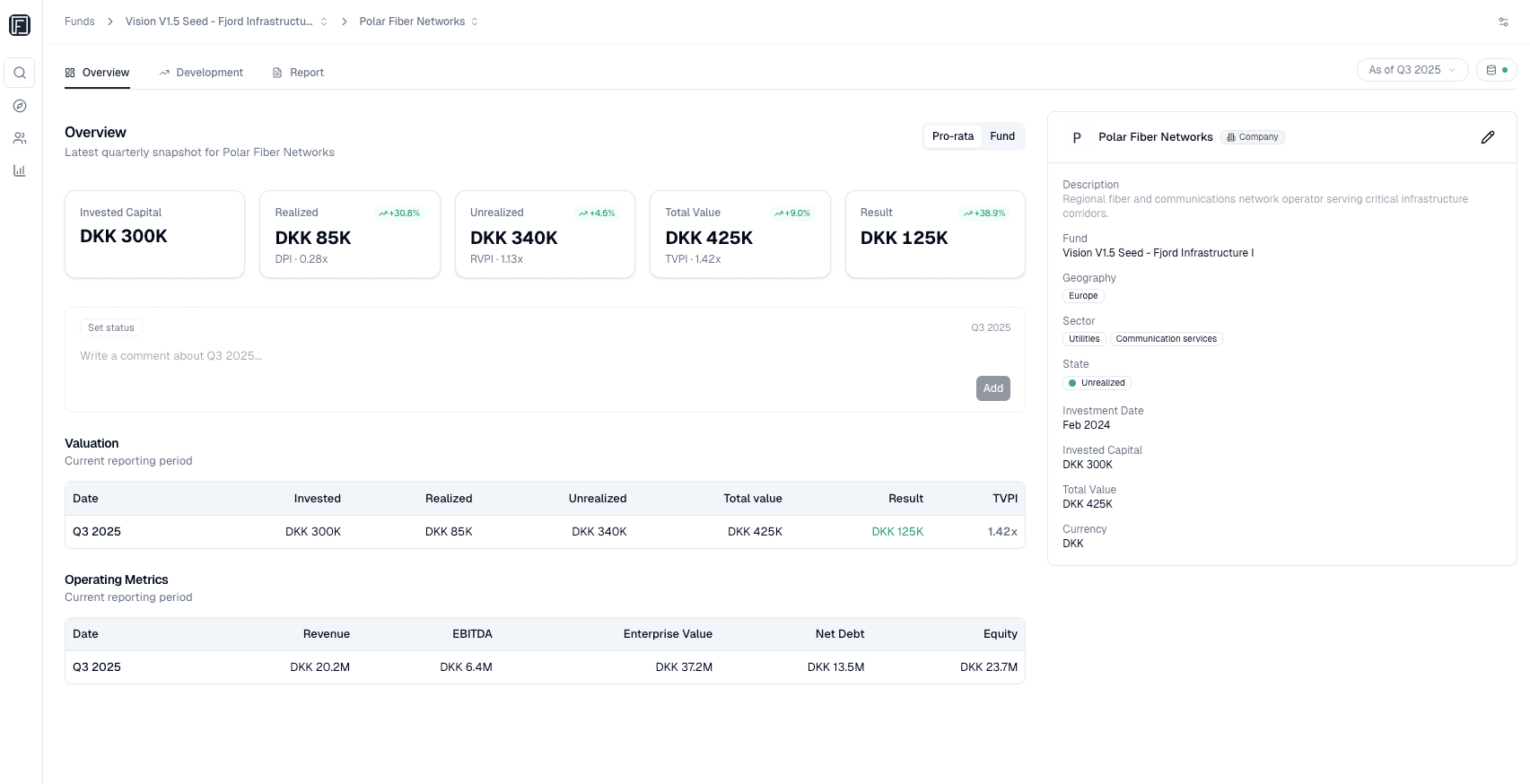
See what is driving the portfolio.
Look through the funds to the companies underneath and see where the return is coming from, and where the risk sits. Cut the portfolio by sector, geography, vintage or manager, and see a company held through several funds as one exposure.
Invest with what the portfolio taught you.
Every quarter adds to the manager's record. Whether one company carried the fund or the whole portfolio delivered, and how it ranks against the rest of what you hold. When that manager comes back with the next fund the answers are already on the table.
On the record

The risk manager, the investment manager and the finance function, on one record.
Flows in
When a commitment closes, the manager, the fund and everything diligence found move straight into Portfolio Monitoring. Nobody re-enters anything.
Flows out
As NAVs and cash flows come in they move the forecast, and what the portfolio did goes back onto the manager's record, ready for the next time they raise.
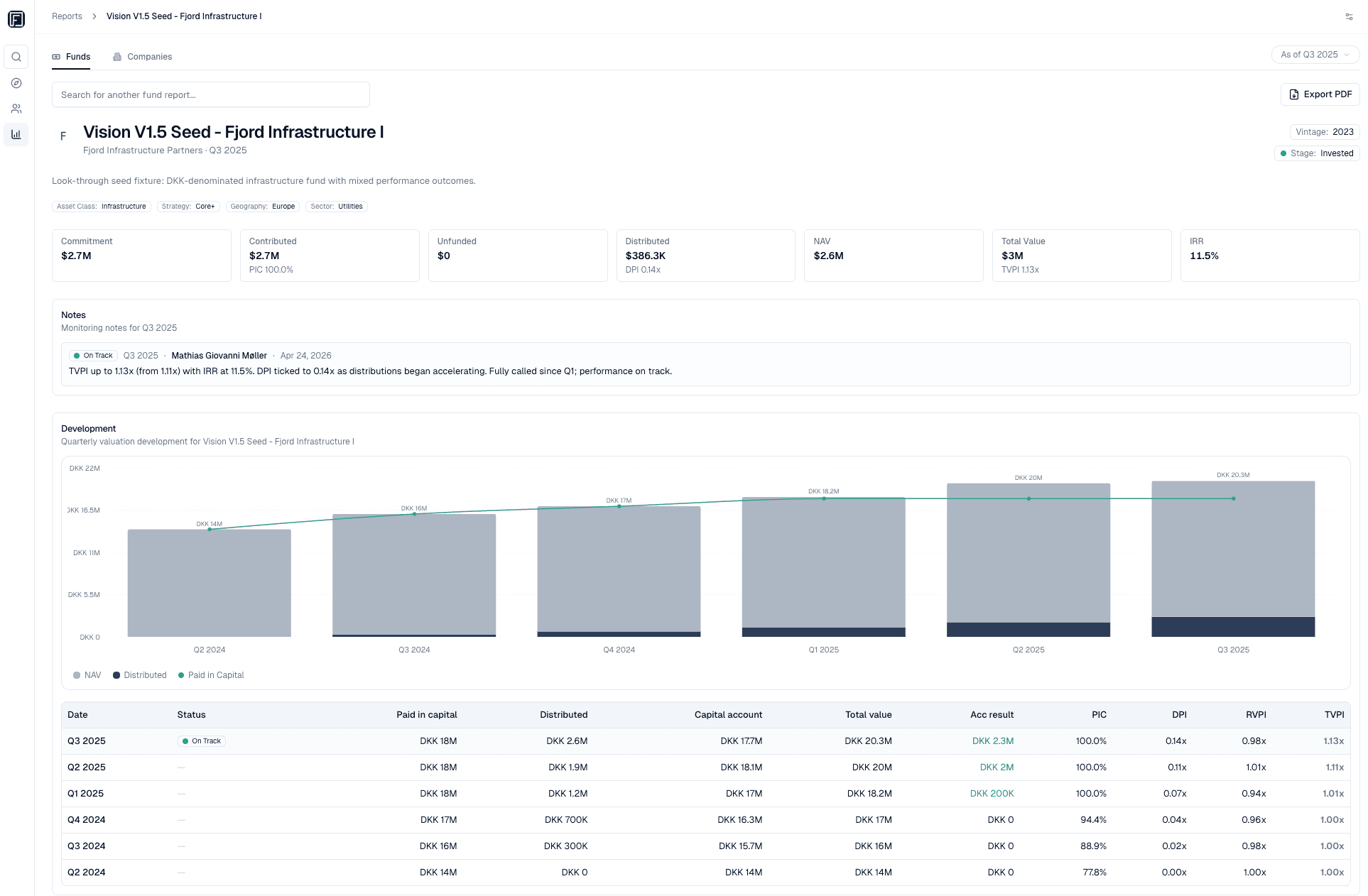
The quarter on one page.
Exposure, performance and cash flow for the period, laid out so an investment committee can read it in a few minutes. Switch between pro-rata and fund-share views, and send it as a link rather than a deck.
Common questions
Something else? Get in touch.